
Substance control
Effective substance control aims to prevent the entry of intoxicating substances into prison, their use in prison and drug-related crime managed from prison.
The goal of individual work with prisoners and related supervision and the placement of prisoners in prisons and wards is to affect prisoners’ possible substance abuse so that all prisoners will have a safe environment that supports their abstinence.
Over the past few years, the number of narcotics crimes has rapidly increased, which is also visible in prisons. Narcotics crimes have extremely harmful side effects, such as the threatening and extortion of the family, other prisoners, and even the personnel. Some prisoners are so afraid of other prisoners due to drug-related debts or dependence that they have to be accommodated segregated from other prisoners.
The substance control of prisons has been intensified significantly in recent years. The work against substance abuse is based on an approved substance abuse strategy. In addition, measures related to training, information, rehabilitation, and health care have been implemented.
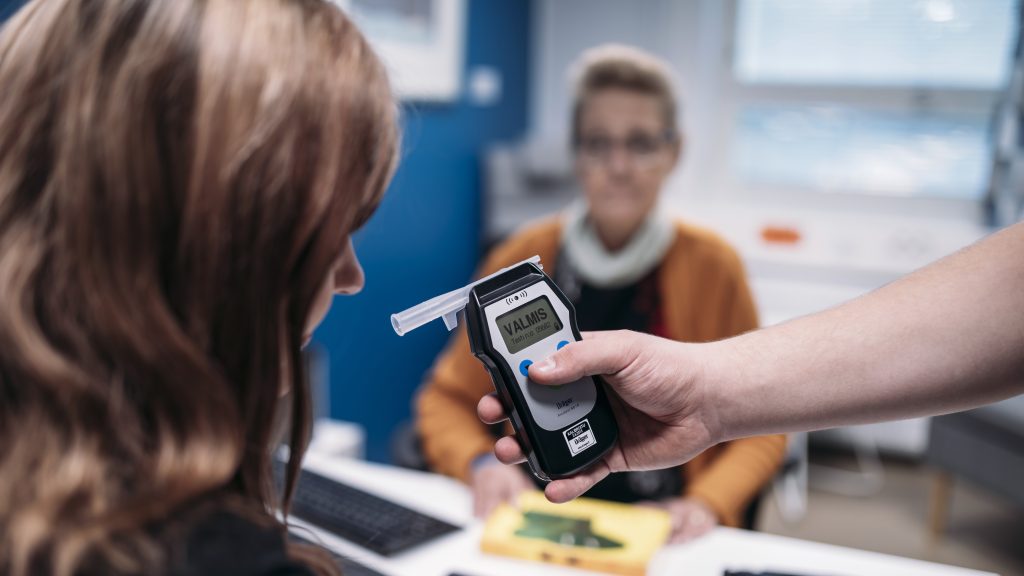
If prisoners are suspected of being under the influence of intoxicating substances, the prison director may decide that they have to give a urine sample or take a breath test. Additionally, giving a urine sample and taking a breath test on request may be set as a condition for an unsupervised visit, a prison leave, study or civilian work permit as well as for a participation in an activity arranged outside the institution. All open prisons are substance-free institutions where only prisoners committing themselves to abstinence from substances are placed and where the abstinence is controlled by regular tests.
Some of the positive results of the drug tests carried out in prisons are explained by the used medication. Most of the tests are random tests covering all prisoners in open prisons and in the substance-free wards of closed prisons. Most commonly found substances include benzodiazepine, cannabis, buprenorphine and amphetamine.
Special substance control searches are carried out in the institutions annually. Other authorities can also be involved in the special searches and the co-operation between authorities has actually been intensified in all areas of substance control. All closed prisons have a narcotics detection dog and its handler, who participates in the special substance control searches as well as the daily inspections of the prison.